Following the Bottle: How Ivermectin Reaches a 24-Hour US Pharmacy in 2026
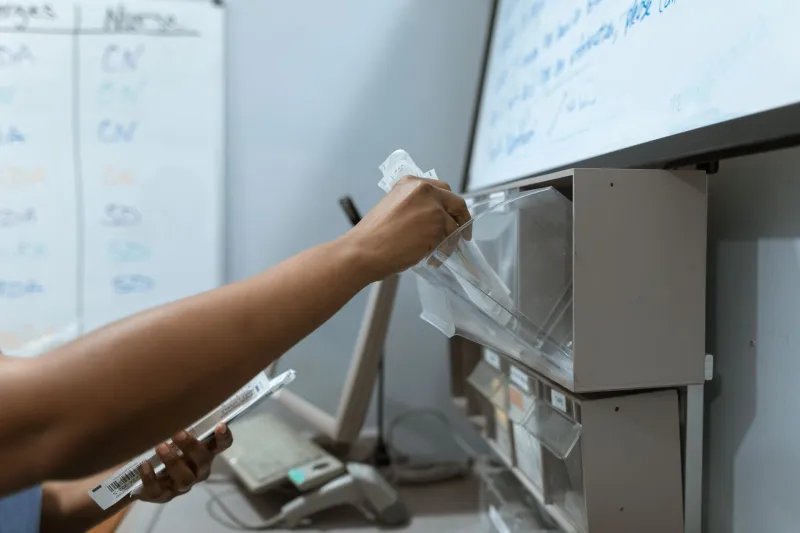
Photo: pharmaceutical warehouse shelves with medicine boxes and pharmacist inventory, via 0.academia-photos.com
Patients often interpret a single pharmacy's out-of-stock notice as proof of a national shortage. In most cases, it is evidence of something narrower: a particular store, at a particular hour, has exhausted its on-hand supply and has not yet replenished it. Understanding the ivermectin supply chain in 2026 requires separating local inventory from national availability.
Why a Local Gap Is Not a National Shortage
Human ivermectin in the United States reaches patients through a layered system of manufacturers, wholesale distributors, chain and independent pharmacies, and, occasionally, specialty distributors. Each layer makes decisions based on contracts, forecasts, storage capacity, and local demand. The system is designed for predictable demand, not for every product to be on every shelf at every hour.
That distinction matters for patients seeking round-the-clock access. A 24-hour pharmacy may have a pharmacist available overnight while keeping only a small number of low-volume prescription products on hand. When a prescription arrives at 2 a.m., the pharmacy may be able to verify that the product exists in the broader supply chain even if it cannot dispense it immediately.
From Active Ingredient to Finished Tablet
The supply chain begins with active pharmaceutical ingredient production. Finished-dose manufacturers then combine the active ingredient with inactive excipients, compress tablets, test for potency and dissolution, package the product, and release it for distribution. Human ivermectin tablets in the US are commonly available in 3 mg strengths, with brand-name and generic products subject to prescription requirements and pharmacy dispensing rules.
Quality testing and regulatory release are not optional steps. A batch that fails specification cannot simply be sold while paperwork is completed. This is one reason a supply interruption at a single manufacturing site can ripple through regional inventories for weeks or months, even when other manufacturers continue production.
Wholesalers, Allocations, and the Pharmacy's Calculus
Most pharmacies do not buy directly from manufacturers. They purchase through wholesalers or distribution networks that maintain regional warehouses and deliver to stores on scheduled routes. A pharmacy's purchasing system may set minimum and maximum inventory levels for each product. Ivermectin is not typically a high-volume nightly item, so a 24-hour location may stock enough for expected prescriptions rather than enough to serve as a regional depot.
When demand rises or a wholesaler's allocation changes, a pharmacy may see a backorder message rather than an immediate shipment. That message can mean the product is temporarily unavailable from that wholesaler, not that no ivermectin exists anywhere in the country. Chain pharmacies may also route certain orders through their own distribution centers, which adds another layer of timing.
The Special-Order Path
A special order is often the most practical response to a local gap. The pharmacy checks whether its wholesaler has the product, whether an alternate package size or tablet strength is available, and when the next delivery is scheduled. Timelines vary by store and distributor. Some orders arrive the next business day; others take longer. A pharmacist may also check nearby stores within the same chain or suggest an independent pharmacy with different wholesaler relationships.
Patients can help by asking precise questions. Is the product out of stock, on backorder, or simply not carried? Can it be ordered, and what is the expected arrival date? Is a different tablet strength available, and would the prescriber need to adjust the prescription? These questions move the conversation from frustration to logistics.
Transfers and 24-Hour Access
Prescription transfers require patient consent and cooperation between pharmacies. A 24-hour location may be able to receive a transferred prescription and dispense it if the product is on hand, but patients should call first. Not every pharmacy with a 24-hour front door has a pharmacist on site overnight, and not every overnight pharmacist can complete a special order before morning.
For urgent situations, the prescribing clinician and pharmacist should be part of the same conversation. A clinician may be able to send the prescription to a pharmacy that has confirmed stock, or a pharmacist may identify a realistic timeline for an order. Telehealth and after-hours prescribing can close part of the access gap, but they do not create inventory where none exists.
A Practical Playbook for Patients
- Ask whether the issue is out of stock, backordered, or not carried.
- Request a special order and ask for a specific expected arrival date.
- Inquire about alternate tablet strengths only after consulting the prescriber.
- Ask the pharmacist to check nearby stores or suggest a transfer.
- Keep the prescription current and avoid letting it expire while waiting.
- Use legitimate human pharmaceutical sources; veterinary products are not substitutes.
- Plan refills before weekends and holidays when delivery schedules are limited.
What Realistic Access Looks Like in 2026
National supply and local access are related but not identical. In 2026, patients can generally expect human ivermectin to be obtainable through legitimate prescription channels, but the timing may depend on the pharmacy, the wholesaler, and the hour of the request. Round-the-clock access is an operational goal, not a guarantee. The most effective approach is to treat the pharmacist as a supply-chain partner: ask clear questions, request special orders early, and keep clinical decisions with the prescriber.