Same Drug, Dangerous Difference: Why Veterinary Ivermectin Has No Place in Human Medicine
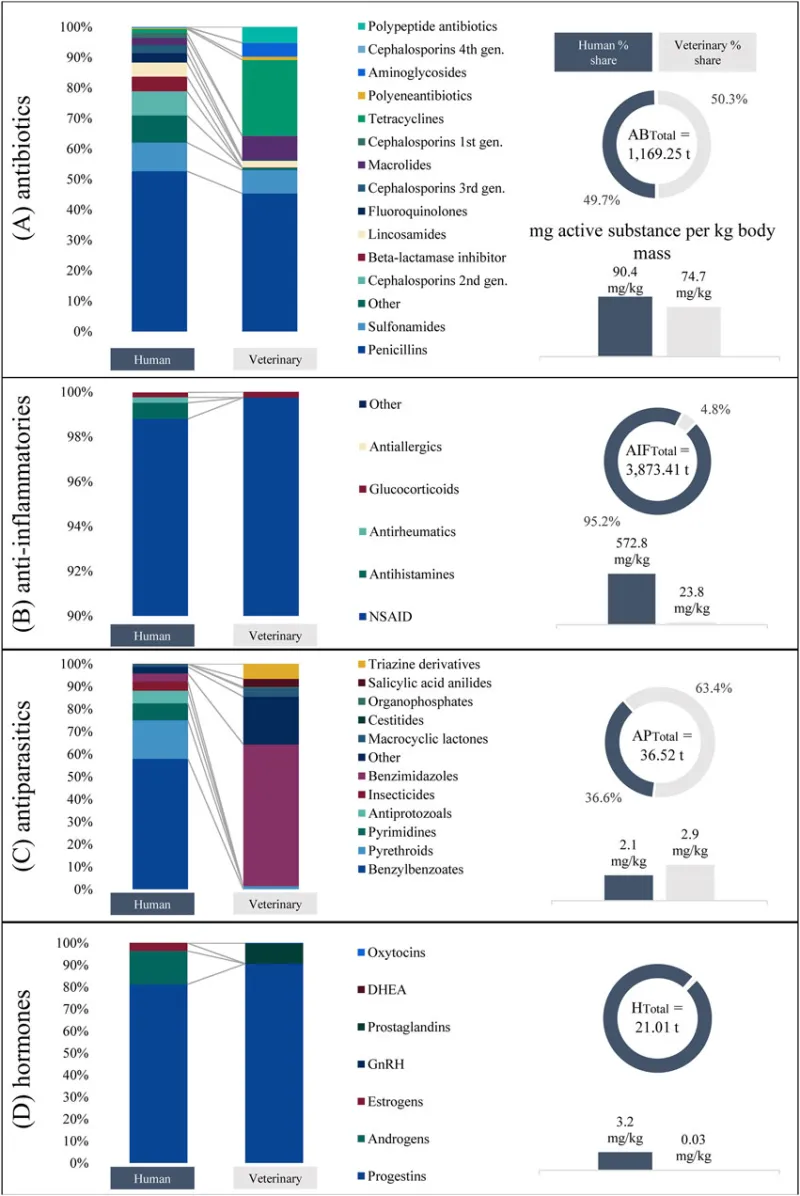
Photo: veterinary medicine versus human medicine pills comparison laboratory, via www.frontiersin.org
When a medication becomes a household name — for better or worse — misconceptions tend to follow. Ivermectin is no exception. Over the past several years, a troubling pattern has emerged across the United States: individuals seeking ivermectin have turned to farm supply stores, feed shops, and online veterinary retailers, purchasing formulations intended for horses, cattle, and other livestock. The reasoning, on the surface, seems logical. The active ingredient is the same, the price is lower, and access requires no prescription. But this reasoning is dangerously flawed — and the consequences have been well-documented.
At Ivermectin24H, our mission is to provide accurate, science-grounded information about ivermectin so that patients can make informed decisions through legitimate medical channels. Few topics demand that clarity more urgently than this one.
The Active Ingredient Is Only Part of the Story
It is technically accurate that both veterinary and human formulations of ivermectin contain the same active compound. However, reducing any pharmaceutical product to its active ingredient alone fundamentally misunderstands how medications are formulated and how they interact with the human body.
Every medication — whether a tablet, topical cream, or injectable solution — contains inactive ingredients known as excipients. These include binders, fillers, stabilizers, solvents, and preservatives. In human pharmaceuticals, every excipient must be reviewed and approved by the U.S. Food and Drug Administration (FDA) for safety in human consumption. Veterinary products are held to an entirely different regulatory standard, one designed for the physiology of animals that may weigh hundreds or even thousands of pounds.
Veterinary ivermectin pastes and pour-on solutions, for example, frequently contain propylene glycol, mineral oil, and other industrial-grade solvents at concentrations that are inappropriate — and potentially toxic — for human ingestion. Some formulations include flavoring agents or preservatives that have never been evaluated for human safety at therapeutic doses. The presence of these compounds introduces a layer of risk entirely separate from the ivermectin itself.
Dosing: A Margin for Error That Doesn't Exist in Humans
Perhaps the most immediately dangerous discrepancy between veterinary and human formulations is dosing concentration. A standard tube of ivermectin horse paste sold at a farm supply store is calibrated to treat a 1,250-pound animal. The concentration of active ingredient in a single application is vastly greater than what would be prescribed to a human patient.
Human ivermectin tablets — available in 3 mg doses — are calibrated with precision. Prescribing physicians calculate dosage based on a patient's body weight, medical history, and the specific condition being treated. This level of individualized calibration is simply not possible with a product designed for veterinary use. Attempting to estimate a human dose from a large-animal formulation introduces an enormous margin for error, and the consequences of ivermectin overdose are serious.
The FDA and the Centers for Disease Control and Prevention (CDC) have both documented a significant rise in ivermectin-related calls to poison control centers during periods of heightened public interest in the drug. Symptoms of overdose include nausea, vomiting, low blood pressure, neurological effects such as ataxia and seizures, and in severe cases, coma. These are not theoretical risks — they are outcomes that American emergency departments have treated in real patients who self-administered veterinary products.
Manufacturing Standards: A Regulatory Divide
The FDA's Current Good Manufacturing Practice (cGMP) regulations govern the production of human pharmaceuticals with extraordinary rigor. Every batch of human-grade ivermectin must meet stringent purity standards, undergo quality control testing, and be manufactured in facilities subject to regular federal inspection.
Veterinary pharmaceuticals are regulated by the FDA's Center for Veterinary Medicine, which applies standards appropriate for animal health products — not human consumption. This does not mean veterinary medications are poorly made; it means they are made for a different purpose, under different parameters, with different acceptable tolerances for contamination, concentration variance, and ingredient sourcing.
When a patient takes a human pharmaceutical tablet, they can reasonably trust that what is on the label reflects what is in the product, within tightly controlled limits. That same assurance does not extend to a tube of livestock paste purchased at a rural co-op.
The Misinformation Pipeline
Online communities, social media platforms, and certain alternative health websites have played a significant role in normalizing veterinary ivermectin use among American consumers. Posts sharing dosing "calculators" and purchase links for animal products have circulated widely, often framed as a way to bypass what some perceive as unfair restrictions on access to the drug.
This framing deserves a direct response: legitimate access to pharmaceutical-grade human ivermectin is available in the United States through standard medical channels. Physicians can and do prescribe it for FDA-approved indications including onchocerciasis and strongyloidiasis, as well as for other parasitic conditions. Compounding pharmacies can prepare customized formulations for patients with specific needs. The premise that veterinary products are the only accessible option is simply not accurate.
What Patients Should Do Instead
If you believe you have a medical need for ivermectin, the appropriate path begins with a consultation with a licensed healthcare provider. A physician can evaluate your symptoms, confirm a diagnosis, determine whether ivermectin is the right treatment, and prescribe the correct pharmaceutical-grade formulation at the appropriate dose for your body weight and condition.
For patients navigating cost concerns, generic ivermectin tablets are widely available at major US pharmacy chains and are generally affordable, particularly for patients with insurance coverage. Assistance programs and discount cards can further reduce out-of-pocket costs for those without coverage.
Veterinary ivermectin is not a shortcut. It is a different product, manufactured to different standards, at concentrations designed for animals. The risk it poses — from toxic excipients, imprecise dosing, and unregulated manufacturing — is real, documented, and entirely avoidable when patients engage with the legitimate medical system.
At Ivermectin24H, we are committed to ensuring that every reader has access to the factual, unambiguous information they need to make safe decisions. When it comes to veterinary formulations, the information is clear: they are never an appropriate substitute for pharmaceutical-grade human medication.