From Soil Sample to Pharmacy Shelf: The Regulatory Milestones That Made Ivermectin a Trusted Human Therapeutic

Photo by Photo by Lucas Vasques on Unsplash on Unsplash
Few medications carry a history as scientifically compelling as ivermectin. What began as a microbiological curiosity discovered in a handful of Japanese soil eventually became a pharmaceutical agent that the World Health Organization lists among its essential medicines. For patients in the United States seeking to understand the full context behind their prescription, that origin story — and the rigorous regulatory pathway that followed — is worth knowing in detail.
A Discovery Rooted in the Earth
In 1973, researchers at the Kitasato Institute in Japan, working in collaboration with scientists at Merck Research Laboratories, collected soil samples from a golf course near Kawana, Japan. Within that sample lived a previously undescribed bacterium, eventually named Streptomyces avermitilis. The natural compounds it produced — avermectins — demonstrated extraordinary antiparasitic activity in early laboratory screening.
Merck's Dr. William Campbell and the Kitasato Institute's Dr. Satoshi Ōmura recognized the potential immediately. Through a process of chemical refinement, they isolated the most biologically active component of the avermectin family and named it ivermectin. The compound's mechanism was unlike most existing antiparasitic agents: it selectively disrupts the nervous system of invertebrates by enhancing glutamate-gated chloride ion channel activity, effectively paralyzing and eliminating parasites without producing the same effect in mammalian hosts.
For their foundational work, Campbell and Ōmura were awarded the Nobel Prize in Physiology or Medicine in 2015 — a recognition that underscored just how significant this discovery proved to be over the following four decades.
The Veterinary Era: Building the Safety Foundation
Before ivermectin ever entered a human clinical trial, it underwent extensive evaluation in animal medicine. The FDA approved ivermectin for veterinary use in 1981, initially for use in cattle, horses, and other livestock to treat a broad spectrum of internal and external parasites. These early approvals were not merely commercial milestones; they generated an enormous body of pharmacological and toxicological data that would later inform human studies.
Veterinary use established several important baselines: effective dosing ranges, metabolic behavior, potential adverse effects, and species-specific tolerability profiles. This foundation gave researchers a meaningful starting point when clinical trials for human applications began in earnest during the early 1980s.
It is worth noting, however, that the veterinary formulations developed during this period were never intended for human consumption. Concentrations, inactive ingredients, and delivery mechanisms differ substantially from pharmaceutical-grade human formulations — a distinction that remains critically important for patients today.
Human Clinical Trials and the Path to FDA Approval
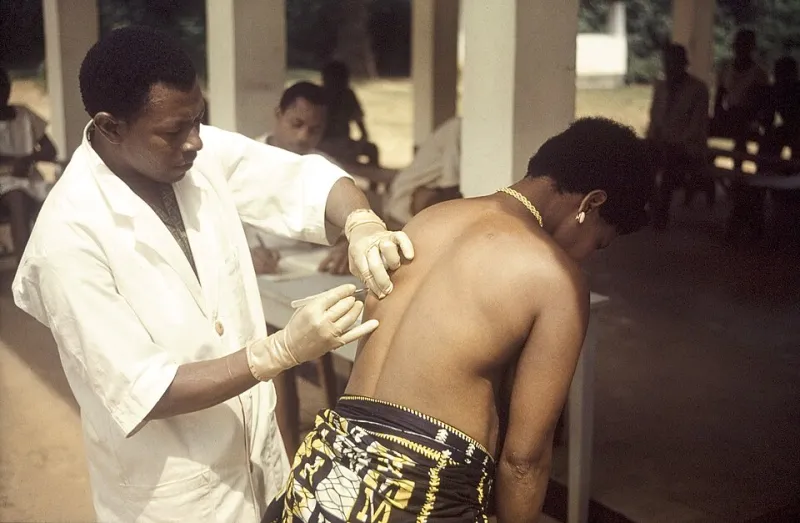
The transition from veterinary application to human medicine required a separate and demanding regulatory process. Merck initiated human clinical trials focused on onchocerciasis, commonly known as river blindness — a debilitating parasitic disease caused by Onchocerca volvulus and transmitted by blackfly bites. The disease was, and in many regions remains, a leading cause of preventable blindness in tropical areas of Africa, Latin America, and Yemen.
Clinical data accumulated across multiple studies demonstrated that ivermectin was both highly effective and well-tolerated in human subjects. Crucially, these trials were conducted under the oversight of regulatory authorities and followed the structured phases of pharmaceutical evaluation: initial safety assessments in small populations, followed by larger efficacy and dosing studies, and ultimately broad confirmatory trials.
In 1987, the FDA approved ivermectin for human use under the brand name Stromectol, initially indicated for the treatment of onchocerciasis. The approval was significant not only as a public health achievement but as a model of pharmaceutical development: a compound discovered in nature, refined through chemistry, validated through animal studies, and ultimately confirmed safe and effective for humans through structured clinical investigation.
Expanding Indications Through Continued Study
Following the initial 1987 approval, researchers continued investigating ivermectin's utility against other parasitic conditions. In 1996, the FDA expanded its approved indications to include intestinal strongyloidiasis, a gastrointestinal infection caused by the roundworm Strongyloides stercoralis. This expansion reflected accumulating clinical evidence that ivermectin's mechanism of action was effective against a broader range of nematode species than originally studied.
Beyond these two primary FDA-approved indications, ivermectin has been studied — and in some cases used off-label by licensed physicians — for conditions including scabies, pediculosis (lice infestations), and certain filarial infections. In dermatology, a topical formulation of ivermectin received FDA approval in 2014 for the treatment of rosacea, further demonstrating the compound's versatility and continued relevance in modern medicine.
Each expansion of use, whether through formal approval or evidence-supported off-label prescription, reflects the ongoing scientific engagement with this compound rather than a static regulatory snapshot.
What the Approval Process Means for Patients
For patients in the United States, understanding ivermectin's regulatory history provides meaningful context when evaluating their treatment options. The FDA approval process requires manufacturers to demonstrate not only that a drug works, but that its benefits outweigh its risks in the intended patient population. The data submitted to support ivermectin's approvals included detailed safety profiles, adverse event rates, contraindications, and drug interaction assessments.
This history is also a reminder of why the source and formulation of a medication matter. The ivermectin that received FDA approval was a pharmaceutical-grade compound manufactured under controlled conditions, tested in human subjects, and prescribed at defined doses for specific indications. The regulatory journey that produced today's approved medication is precisely what distinguishes it from unregulated alternatives.
Patients who receive an ivermectin prescription from a licensed US healthcare provider are benefiting from decades of scientific investment — from the soil of Japan to the clinical trial sites of West Africa to the FDA's review offices in Maryland.
A Legacy Reinforced by Ongoing Research
Ivermectin's story did not conclude with its initial approvals. The compound has been the subject of thousands of published studies across multiple decades, and its role in global health initiatives — particularly the Mectizan Donation Program, through which Merck has provided ivermectin free of charge for onchocerciasis control — has made it one of the most widely administered medications in human history.
For American patients, the takeaway is straightforward: ivermectin's place in modern medicine was earned through science, not shortcut. Its regulatory credentials are among the most thoroughly documented of any antiparasitic agent in clinical use. That foundation is precisely what makes an informed conversation with your healthcare provider about ivermectin both worthwhile and grounded in evidence.
When you fill a legitimate ivermectin prescription at a US pharmacy, you are the final recipient of a process that began in a soil sample more than fifty years ago — one that passed through Nobel Prize-winning laboratories, extensive clinical trials, and one of the world's most demanding pharmaceutical regulatory systems before reaching your hands.