The Person Behind the Counter: Tapping Your Pharmacist's Expertise Before You Start Ivermectin
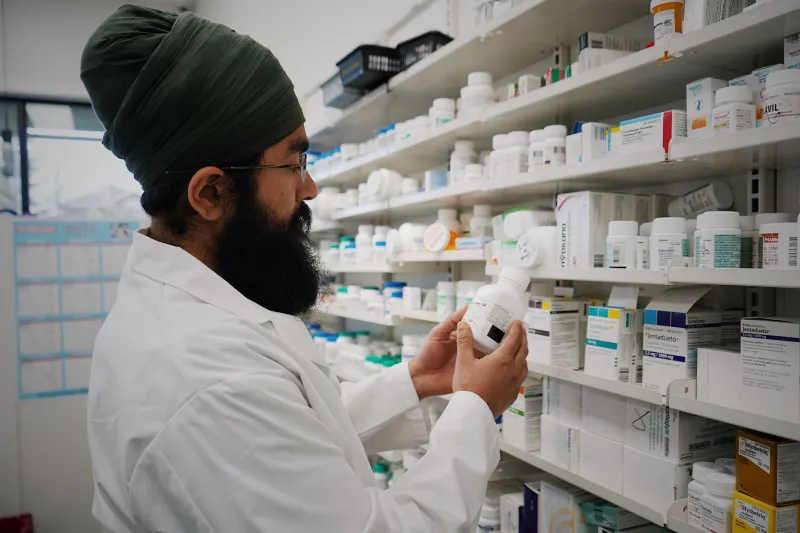
When Americans think about who manages their medications, the physician usually comes to mind first. Yet for many patients, the last clinical professional they speak with before swallowing a pill is not the prescriber at all — it is the pharmacist behind the counter. In the case of ivermectin, where dosing is weight-dependent, interactions matter, and public confusion runs high, that final checkpoint deserves far more attention than it typically receives.
A Different Kind of Expertise
Doctors and pharmacists approach the same prescription from different angles. A physician determines whether ivermectin is clinically appropriate for a diagnosed condition such as strongyloidiasis, onchocerciasis, or certain parasitic skin infestations. The pharmacist, by contrast, evaluates the prescription as it intersects with everything else in your life: your other medications, your supplement regimen, your kidney and liver function as noted in your pharmacy profile, and even practical concerns like whether a tablet should be taken with food or on an empty stomach.
This second layer of review is not a formality. Pharmacists routinely catch prescribing errors, duplicate therapies, and dangerous combinations — sometimes before the patient has left the store. Studies of pharmacy interventions consistently show that medication counseling at the point of dispensing reduces adverse drug events, and ivermectin is no exception to that pattern.
Why Ivermectin Warrants a Conversation
Ivermectin occupies an unusual position in the American pharmaceutical landscape. It is a WHO essential medicine with decades of safety data for its approved parasitic indications, yet it is also a drug surrounded by misinformation. Patients arrive at the counter with assumptions shaped by social media rather than clinical guidelines. A good pharmacist can cut through that noise in a five-minute conversation.
Several practical issues make counseling particularly valuable:
- Dosing precision. Ivermectin is typically dosed by body weight, roughly 200 micrograms per kilogram for many indications. Pharmacists can confirm that the prescribed quantity aligns with the patient's weight on file, an easy safeguard against transcription or calculation errors.
- Food and timing. Taking ivermectin with a meal — particularly one containing some fat — increases absorption. Patients who take it on an empty stomach may receive less drug than intended.
- Interaction screening. Certain medications, including some anticoagulants, benzodiazepines, and drugs that affect liver enzymes, can interact with ivermectin. Your pharmacy profile allows the pharmacist to screen these automatically.
- Repeat treatment schedules. Conditions such as scabies or certain worm infections may require a second dose days or weeks later. A pharmacist can help you plan that timeline and flag warning signs in the interim.
Questions Worth Asking at Pickup
Many patients treat the pharmacy counter as a transaction point rather than a consultation. A short list of prepared questions can change that:
- "Does this dose match my current weight and diagnosis?" — an invitation for the pharmacist to double-check the math.
- "Should I take this with food, and at what time of day?"
- "I also take [medication or supplement]. Is there any concern?"
- "What side effects should prompt me to call my doctor versus seek immediate care?"
- "When would I need a second dose, if at all?"
- "Is a generic version available, and is there a lower-cost option?"
None of these questions require an appointment, and none cost anything to ask. Under most state regulations and professional standards, pharmacists are expected to offer counseling on new prescriptions — patients simply need to accept the offer.
A Resource for the Anxious and the Skeptical Alike
Pharmacists are also well positioned to address hesitation. Patients who have read conflicting information online can ask, plainly, what the drug is approved to treat and what the evidence says. A licensed professional speaking face to face often carries more weight than a search result, and pharmacists are trained to deliver exactly that kind of balanced, evidence-based explanation without judgment.
For patients using telehealth services — a growing channel for ivermectin prescriptions in rural and after-hours contexts — the dispensing pharmacist may be the only clinician the patient ever meets in person. That makes the counter consultation not a courtesy but a critical safety step.
The Bottom Line
Ivermectin is a safe and effective therapy when prescribed appropriately for the right condition and taken correctly. The systems built around it — prescriber review, pharmacist verification, patient counseling — exist to keep it that way. The next time you pick up a prescription, treat the person behind the counter as what they are: a medication expert whose final review might be the most valuable few minutes of your entire treatment. Ask questions. Take the counseling. It is included in the price of the prescription, and it may matter more than you expect.